Asia Adopts Work-From-Home, Shorter Weeks as Energy Crisis Deepens Amid Iran War
Asia is quietly entering an emergency mode.
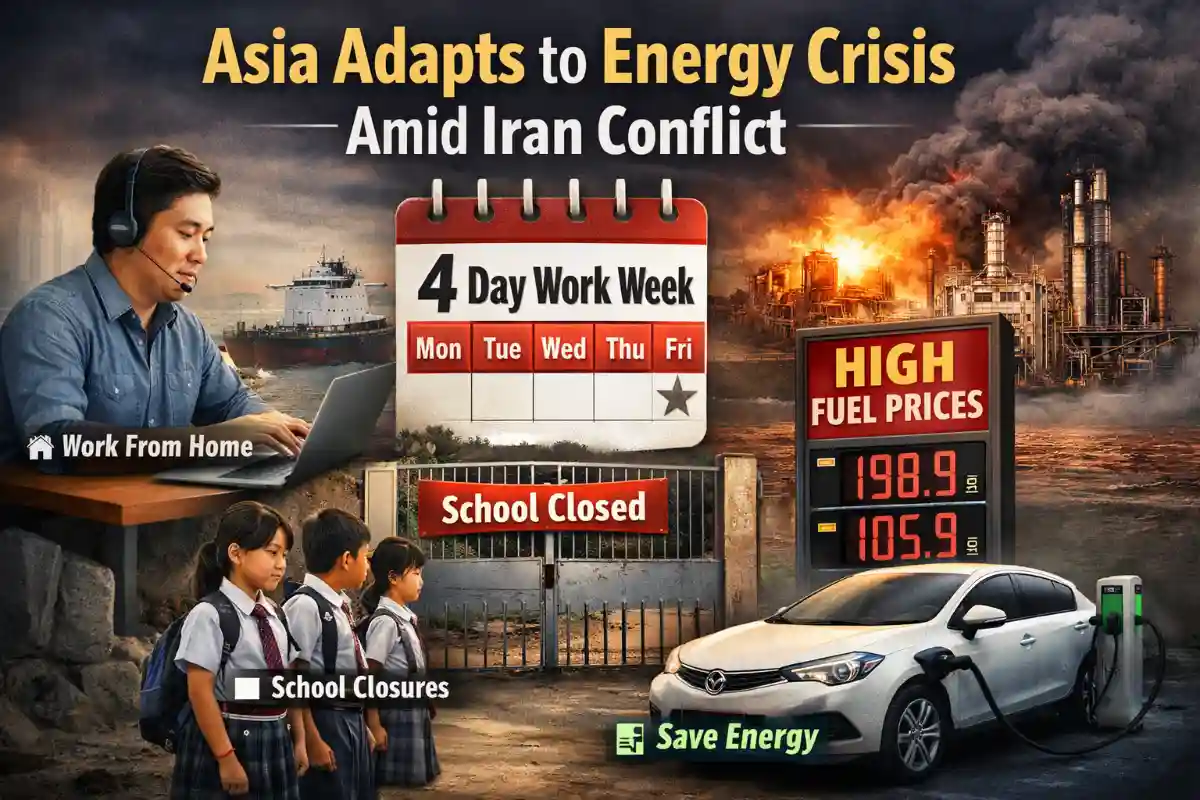
From work-from-home mandates to shorter school weeks, governments across the region are rolling out unusual measures to deal with one thing: soaring energy prices triggered by the ongoing Iran war.
What started as a geopolitical conflict is now reshaping daily life for millions.
Fuel Crisis Spreads Across Asia
The crisis began after escalating conflict in the Middle East disrupted oil supply routes, especially through the Strait of Hormuz, a key global energy chokepoint.
The result?
- Oil prices surged sharply
- Fuel shortages began appearing
- Transport and electricity costs spiked across Asia
Experts say Asia is particularly vulnerable because it depends heavily on imported oil.
Governments Turn to Work-From-Home
One of the most immediate responses has been a return to remote work policies—something last seen during the pandemic.
Countries like:
- Thailand
- Vietnam
- Pakistan
- Philippines
are encouraging or enforcing work-from-home to reduce travel and fuel consumption.
Even global energy experts are backing this move. The International Energy Agency has advised countries to promote remote work and reduce unnecessary travel to cut fuel demand.
Four-Day Work Weeks and School Closures
But it doesn’t stop there.
Several governments are going further by changing how people work and study:
- Philippines: Testing a four-day workweek for government offices
- Pakistan: Cutting office days and closing schools temporarily
- Bangladesh: Shutting universities early to save electricity
- Nepal & Sri Lanka: Introducing energy rationing and shorter schedules
These steps aim to reduce daily commuting and power consumption at scale.
Daily Life Is Changing Fast
In some countries, even small habits are being targeted:
- Shorter showers
- Less air conditioning
- Limits on car usage
- Reduced air travel
South Korea, for example, has launched a nationwide campaign asking citizens to cut energy use wherever possible.
This shows how serious the situation has become.
Rising Prices Are Hitting Everyone
Fuel price shocks are already being felt across the region:
- Gasoline prices rising in Japan and Australia
- Transport costs increasing
- Businesses facing higher operating expenses
In some cases, governments are stepping in with subsidies—but that puts pressure on national budgets.
A Long-Term Shift in Lifestyle?
Here’s the bigger picture.
This isn’t just a temporary crisis.
Experts believe these changes could accelerate:
- Remote work culture
- Electric vehicle adoption
- Renewable energy investments
In fact, demand for electric vehicles is already rising as people look for alternatives to expensive fuel.
The Bottom Line
Asia is adapting fast—but the situation remains uncertain.
As long as the Iran conflict continues, energy prices are likely to stay volatile. And that means:
👉 More work-from-home
👉 Less travel
👉 New daily routines
What we’re seeing right now isn’t just crisis management—it could be the beginning of a new normal.